



People, place & painting
Aboriginal Art.
A living story.
From enduring cultural traditions to the artists who changed the course of Australian painting at Papunya in 1971.
There is much more to this story than a field of dots. Come a little closer to the people, the places and the decisions behind the paintings.
Aboriginal and Torres Strait Islander readers are advised that this page names people who have died.
A much longer beginning
Art did not begin in 1971.
Aboriginal art belongs to many peoples, languages and Countries. Its histories reach back many thousands of years and include rock painting and engraving, work on bark and objects, weaving, designs on the ground and the body, and much more. There is no single Aboriginal art style, and dot painting does not stand for every community’s traditions.
Country is also more than scenery. It includes relationships among land, waters, skies, living beings, knowledge and cultural law. A painting can carry responsibilities and connections that are not immediately visible to an outside viewer. Contemporary Aboriginal artists work across a wide range of materials and forms; being contemporary does not make that cultural connection less significant.
Read moreWhat changed at Papunya was a particular public painting practice: artists brought inherited knowledge into works made with new materials that could circulate beyond the community. Acrylic paintings on boards and canvas became a powerful new chapter within much older, continuing cultures.
Read moreCentral Australia · 1971
A turning point at Papunya.
Papunya was established as a government settlement in 1959, west of Alice Springs. People from different language groups lived there, including Pintupi, Luritja, Warlpiri, Anmatyerr and Kukatja families. Displacement from homelands and the pressures of assimilation form an essential part of the background. This was not an empty place waiting for someone to bring culture to it.
In 1971, men began making portable paintings with acrylic paint and small boards. Early sales brought both recognition and a possible livelihood. The National Museum describes the excitement when paintings taken to Alice Springs earned money for their makers, although finding dependable markets and supplies remained difficult.
Read moreThe school wall
The Honey Ant mural became a focal point. Senior custodians Mick Wallangkarri Tjakamarra and Tom Onion Tjapangati directed the work, with painters including Kaapa Tjampitjinpa, Billy Stockman Tjapaltjarri, Long Jack Phillipus Tjakamarra, Johnny Warangkula Tjupurrula and Don Ellis Tjapanangka. Permission and cultural authority mattered: this was a community-led expression, rather than decoration chosen by an outsider.
Read moreGeoffrey Bardon—and the people beside him
Bardon, an art teacher who arrived in 1971, encouraged the school-wall project and helped artists obtain materials and reach audiences. His role was important, but the artists brought the knowledge, designs, skill and authority. Papunya Tula’s own history places the painters and the company they established at the heart of the movement.
Read moreSupport that made a difference
David Wroth’s 2014 account for Japingka Gallery describes Bardon’s approximately 18 months at Papunya. When he encouraged children to paint from their own experience, senior men drew attention to the knowledge held by older people. The account describes artists from several language groups working together to decide what could be shared with a public audience.
Wroth also describes administrative resistance to supporting an art enterprise. Bardon helped obtain materials, arranged a painting area in a Town Hall hut storeroom in 1972, and sought buyers in Alice Springs. These practical efforts helped paintings reach an audience. The artists’ knowledge, choices and work remained the foundation of the movement.
Read moreObed Raggett, Bardon’s Arrernte assistant, also deserves recognition. The NGV account records his work as a translator and negotiator. Such relationships helped the project happen, even when brief retellings remember only the teacher’s name.
Read more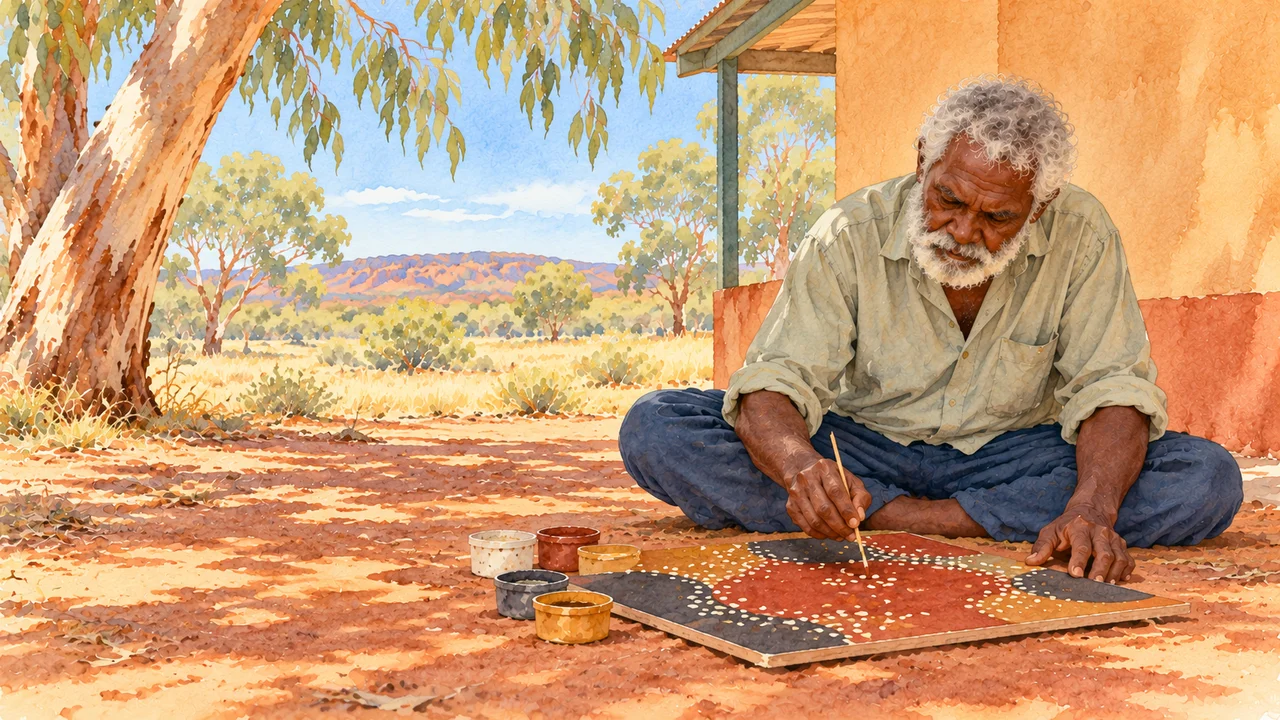
The story unfolds
A few dates to hold onto.
- Long before 1971
Continuing cultural traditions
Many distinct art practices, each grounded in particular communities and knowledge.
- 1971
Papunya’s painting group
The school mural and small painted boards bring a new public movement into view.
- 1972
An artist-owned company
The painters establish Papunya Tula Artists to support and represent their work.
- 1980s
Homelands and new voices
Studios and painting practices develop further west; women gain recognition in their own right.
- 1994–1996
Women reshape the company
Collaborative workshops, an Adelaide exhibition and the company’s first exhibition devoted to women’s paintings mark a major expansion.
Individual voices
The people behind the movement.
The first painters had different Countries, experiences and ways of working. These are some of the key figures, rather than a complete roll-call. Spellings and approximate birth dates vary between records.
Anmatyerr, Warlpiri and Arrernte peoples · c.1926–1989
Kaapa Tjampitjinpa
Kaapa was already an accomplished carver and painter before the school-wall project. A principal artist of the mural and Papunya Tula’s first chairman, he helped give the movement its direction. His shared win in the 1971 Caltex Art Award in Alice Springs brought early public recognition. His leadership makes it impossible to tell this history as a teacher simply introducing art to people who had none.
Read moreAlso recorded as Johnny Warangula
Johnny Warangkula Tjupurrula
Warangkula developed an extraordinarily lively use of layered dots. In his paintings of Kalipinypa, mark-making evokes rain, growth and the changing desert. Former Papunya art adviser John Kean describes an inventive painter continually finding new visual possibilities in the medium. His achievement was individual and experimental, rather than the repetition of a single shared “dot style”.
Read moreAnmatyerr people · c.1927–2015
Billy Stockman Tjapaltjarri
A founding painter and participant in the school mural, Billy Stockman also became an important organiser. He chaired Papunya Tula in 1976–77 and served on the Aboriginal Arts Board from 1975 to 1979. In 1977 he travelled to Nigeria for the World Black and African Festival of Arts and Culture. His contribution joined painting with advocacy and international exchange.
Read moreNgaliya and Warlpiri peoples · 1932–2020
Long Jack Phillipus Tjakamarra
Long Jack was part of the founding group and the mural project. A former stockman, he became chairman of Papunya Tula in 1975 and again in the early 1990s. He continued painting long after the movement’s beginnings, connecting its first years with later generations. Accounts of his life show how artistic practice and community leadership belonged together.
Read moreAnmatyerr people · c.1934–1984
Tim Leura Tjapaltjarri
An original member of the painting group, Tim Leura had worked as a stockman and was an accomplished woodcarver. Earlier experience with watercolour helped him develop atmospheric washes and veils of colour within his paintings. He moved to Papunya with Daisy Leura Nakamarra and their family during the settlement’s construction. His work offers a reminder of how varied the early painters’ skills already were.
Read moreAnmatyerr people · c.1932–2002
Clifford Possum Tjapaltjarri
Clifford Possum’s reputation as a carver preceded the Papunya movement. He became one of its best-known artists and later chaired the company. The National Museum records his inventiveness and his long-established ability to suggest movement in carved animals. He received an Order of Australia in 2002. His career helped audiences recognise a major contemporary artist, as well as a bearer of cultural knowledge.
Read morePintupi people · c.1926–1990
Uta Uta (Wuta Wuta) Tjangala
One of the original painters, Uta Uta remained a powerful presence in the movement through the 1980s. His life also connects painting with the return to homelands: with other Pintupi leaders he helped develop plans for moving back west, and settled at Muyin near Kintore. Country was a lived relationship, not simply a subject to place on a wall.
Read morePintupi people · c.1938–1992
Anatjari (Yanyatjarri) Tjakamarra
Anatjari joined the original painting group in 1971 and became known for carefully organised, precise work. He later spent time in Western Australia and returned to painting for Papunya Tula in the late 1980s. The National Museum records his 1989 solo exhibition in the United States and an acquisition by the Metropolitan Museum of Art, part of the movement’s widening international audience.
Read morePintupi artist and founding painter
Mick Namarari Tjapaltjarri
Namarari was one of the movement’s original artists and developed a distinguished, long-running practice. His achievements included the National Aboriginal Art Award in 1991 and the inaugural Red Ochre Award in 1994. His authorised biographer Alec O’Halloran places the individual, his family relationships and his Country at the centre of the story. His career extends far beyond the movement’s first burst of activity.
Read moreAn essential part of the story
Where were the women?
The 1971 mural and the first publicly recognised Papunya painting group were led by men. That is different from saying women had no art or cultural knowledge. The National Museum records that women at Papunya were discouraged from painting independently during the 1970s, partly because management believed the company’s limited resources could not support more painters. Women continued making work in other forms, including painted and carved coolamons and dancing boards.
Read moreThe exhibition developed by Kluge-Ruhe with Papunya Tula Artists describes wives and daughters helping the early male painters, sometimes dotting backgrounds, and some women painting informally. It also identifies Pansy Napangardi among the women making a place for themselves in the early 1980s. Informal assistance, cultural authority, and formal recognition as a company artist are different kinds of involvement; the surviving records do not give us an evenly mixed founding group in 1971.
Read moreDaisy Leura Nakamarra
Daisy, an Anmatyerr artist, learned painting from her husband Tim Leura and joined Papunya Tula in the early 1980s. The National Museum describes her as one of the first women in the company to gain recognition. A senior law woman, she deliberately kept restricted ceremonial imagery out of her paintings and often painted bush-food subjects. Her choices show an artist actively deciding what to share with a public audience.
Read moreThe women who insisted on painting
In 1994, women at Walungurru (Kintore), including a group led by Mantua Nangala, secured support from Marina Strocchi for a collaborative workshop. Another workshop followed in 1995, and the paintings were shown at Tandanya in Adelaide that July. Papunya Tula held its first exhibition of women’s paintings in 1996. Artists including Makinti Napanangka, Ningura Napurrula, Tjunkiya Napaltjarri and Wintjiya Napaltjarri helped transform the company’s painting practice.
Read moreA wider story than one company
Women’s painting across Central Australia cannot be reduced to Papunya Tula’s chronology. At Utopia, Emily Kame Kngwarreye developed a remarkable approach to dots and colour. The National Museum traces her movement from the structures of batik into expansive fields of dots, varying their scale, density and rhythm. Her example belongs beside the Papunya story without being folded into its 1971 founding group.
Read more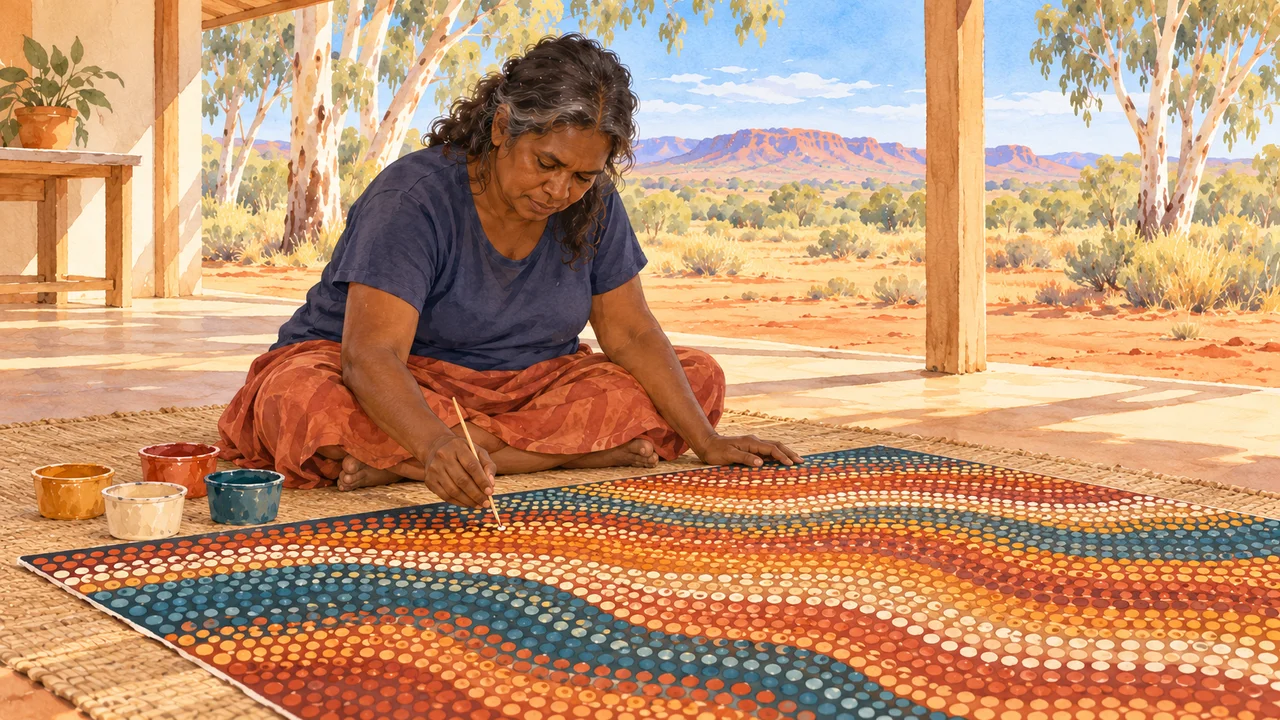
Looking with a little more care
Why dots—and why no single answer?
Dots were not invented by a schoolteacher in the 1970s. Earlier body and ground designs were part of the cultural knowledge artists brought to painting. Public images raised difficult questions about what could be shown, and to whom. Some painters altered or veiled imagery, with layered dots helping reveal and conceal different levels of knowledge. That is part of the history, rather than a complete explanation for every dot in every painting.
Read moreDots also became a field of extraordinary artistic invention. In Johnny Warangkula’s work, layered marks can evoke vegetation responding to rain, as well as producing an active, shimmering surface. Artists varied spacing, colour, pressure and rhythm. Treating all dot paintings as interchangeable camouflage would overlook that creativity and each painter’s particular relationship to place.
Read moreA visual language is not a universal code
A circle, a line or a field of dots cannot be reliably translated with a single internet “symbol dictionary”. The National Museum shows how a similar motif can carry different meanings in different works. The artist’s own account, and what the artist has chosen to make public, provide a better starting point than guessing from appearance.
Read moreNew materials, continuing ownership
In 1972 the artists established Papunya Tula Artists. The company is owned and directed by Aboriginal people of the Western Desert. As families returned to homelands during the 1980s, its work extended to communities including Kintore and Kiwirrkurra. The company’s account explains that public paintings require careful choices about ancestral designs and restricted material. Its purpose includes supporting individual artists, economic development and the continuation of cultural heritage.
Read moreThe resulting paintings belong in the story of contemporary art. The NGV’s 1985 exhibition The Face of the Centre recognised the artists’ innovation in transferring earlier, often impermanent practices into durable new media. The achievement was both continuity and change: new kinds of paintings made by artists with their own intellectual and cultural foundations.
Read more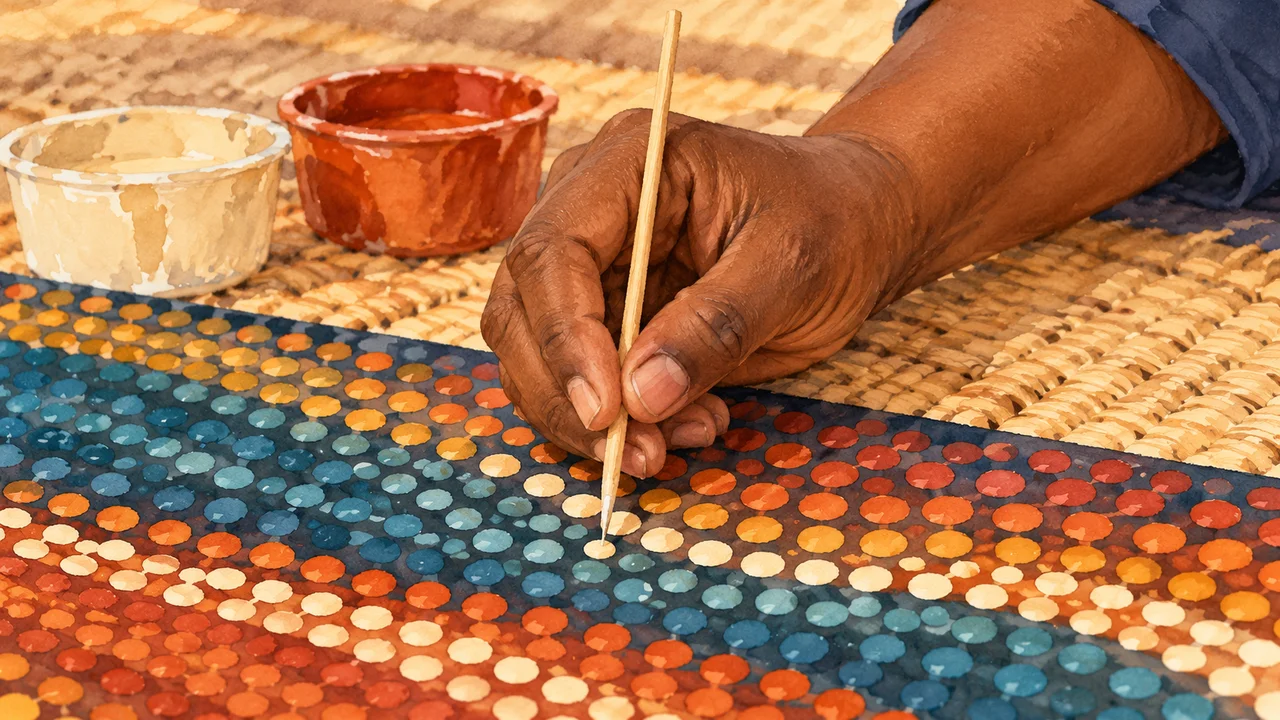
From Robin’s gallery
Rhythm, colour.
My own response.
Colour, repeated marks and the Australian landscape meet in these dot-inspired digital artworks from my gallery. Each is my own contemporary response, presented separately from the Aboriginal artists and cultural histories explored above.
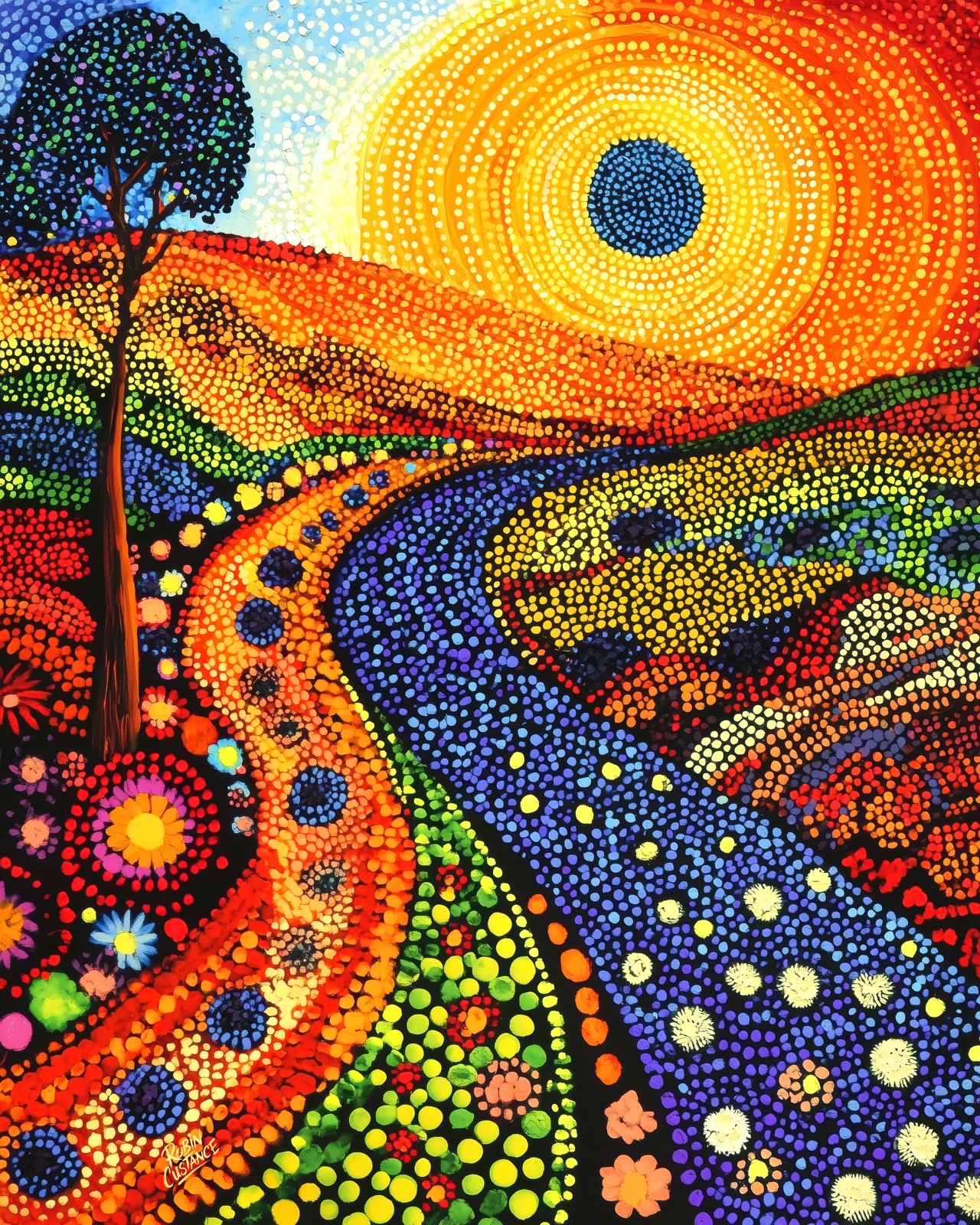
Sunlit Outback Tree — Colourful Landscape
Explore artwork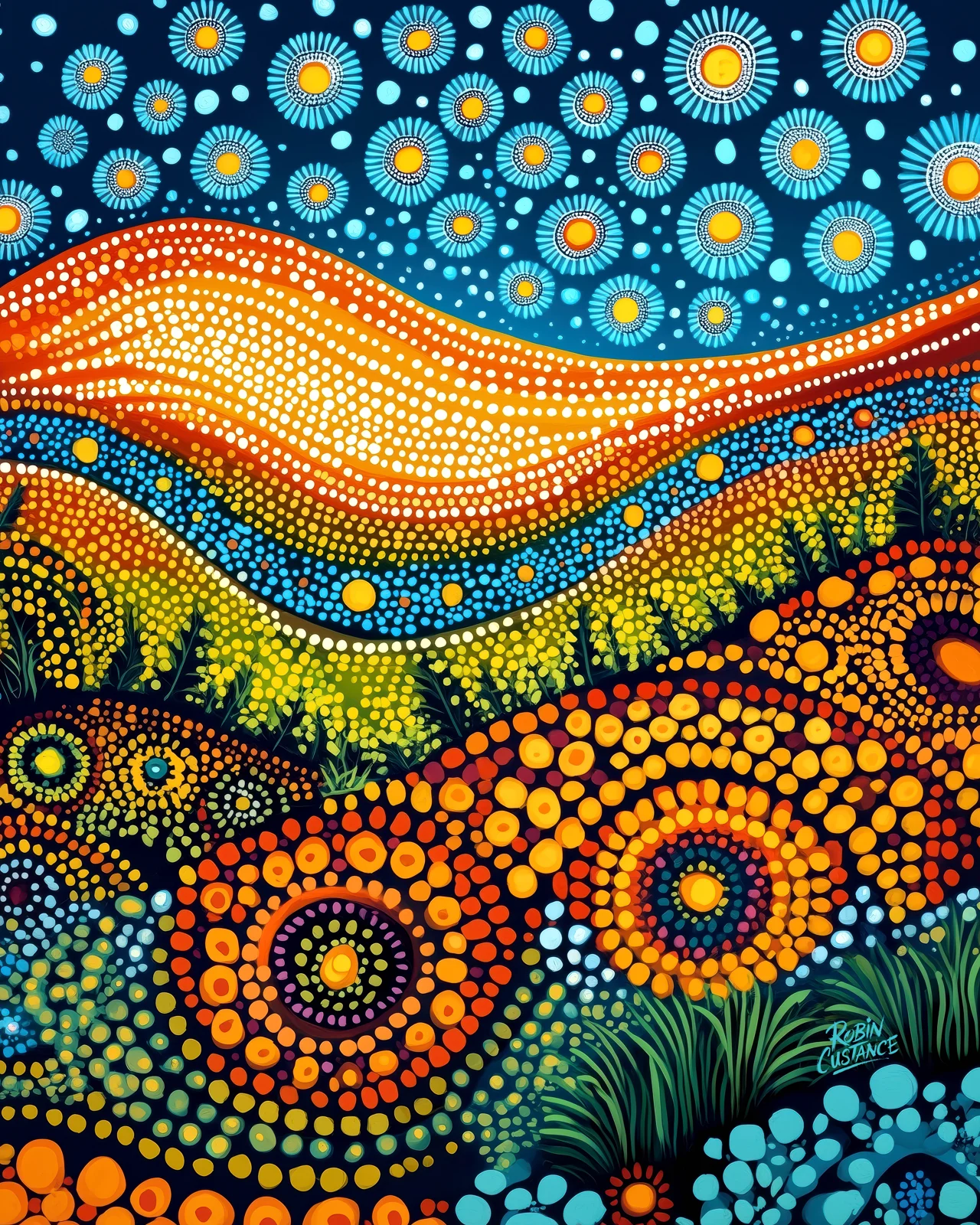
Starry Outback Hills — Colourful Night Landscape
Explore artwork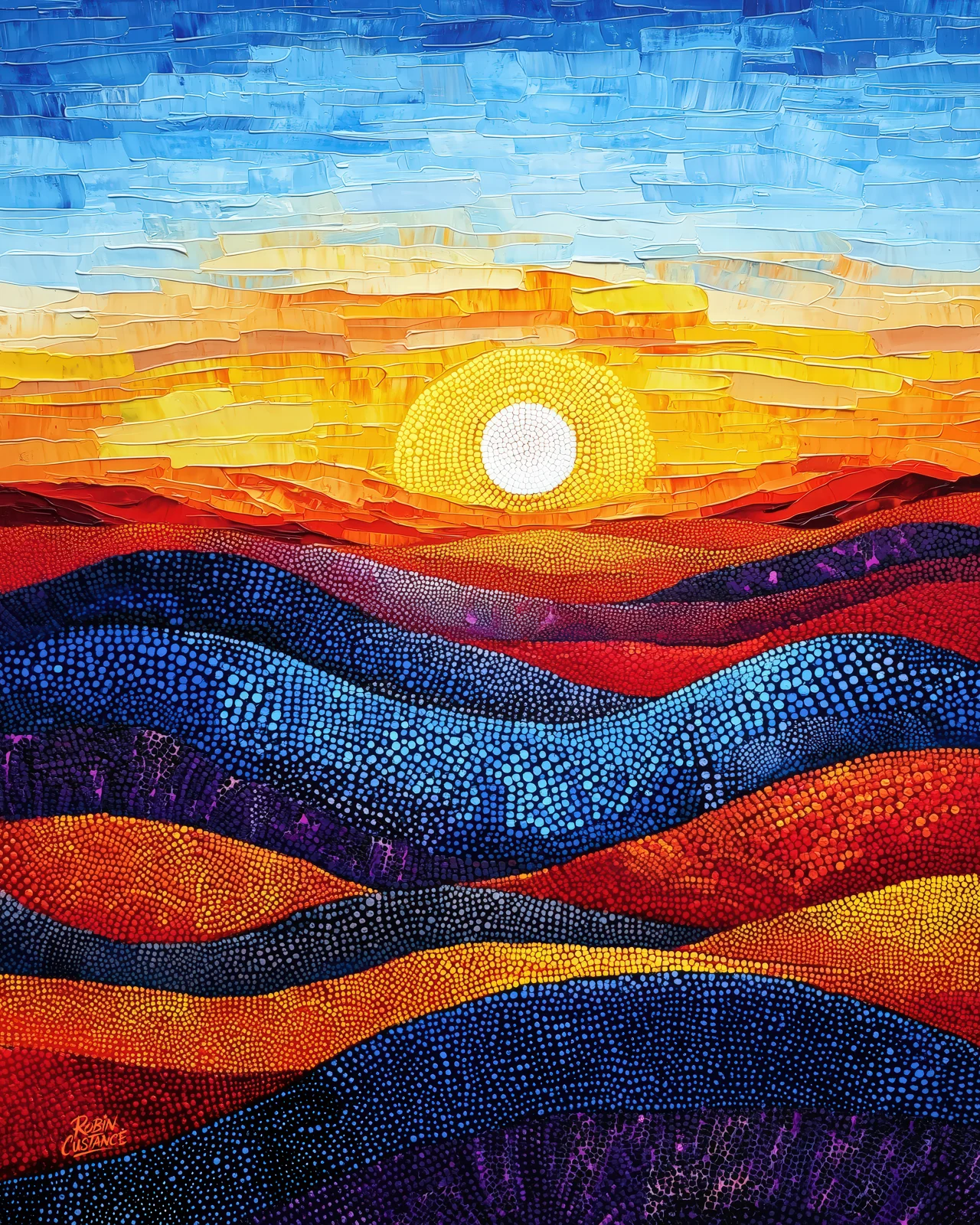
Outback Sunset — Colourful Dot-Style Landscape
Explore artwork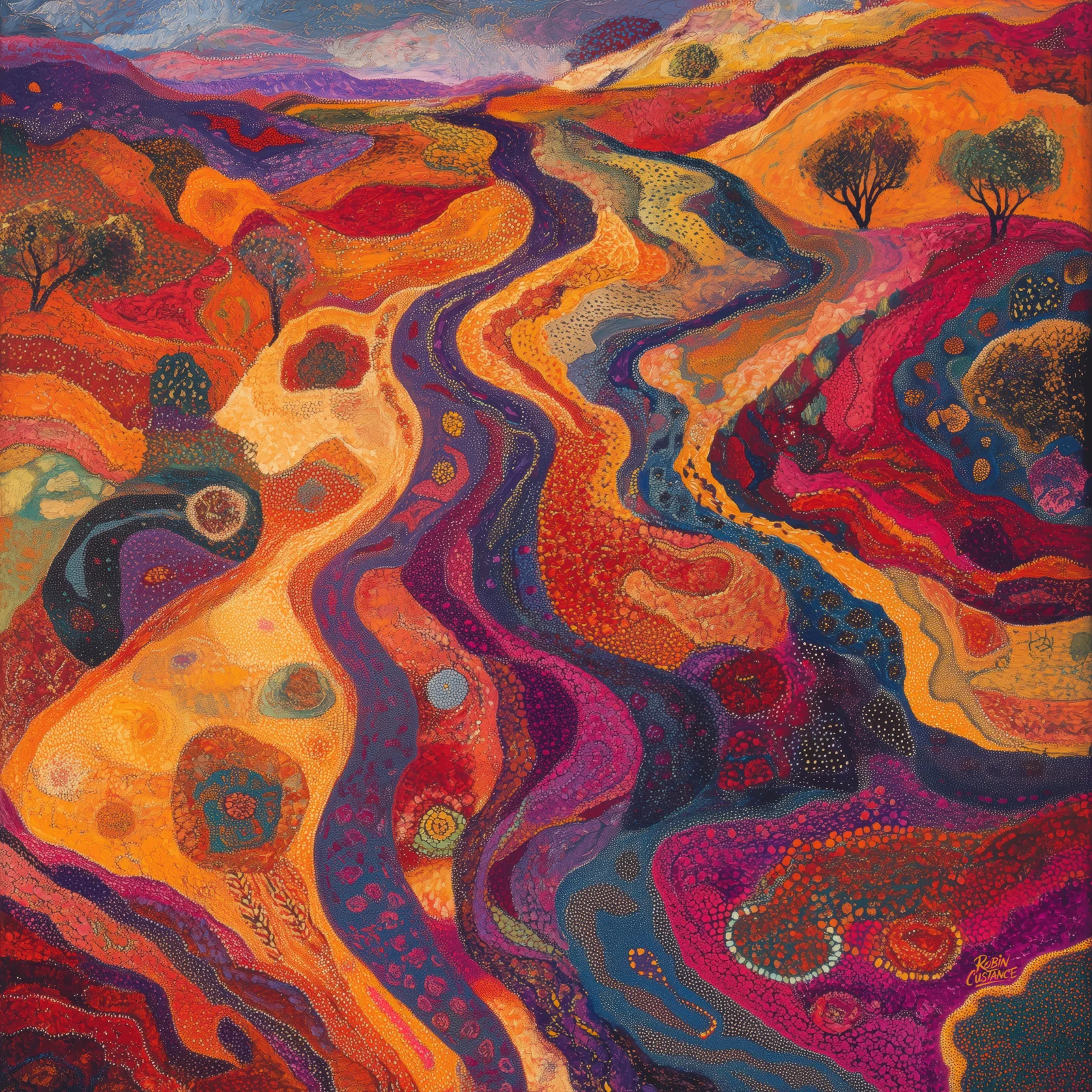
Riverland Dreaming — Colourful Waterway Abstract
Explore artwork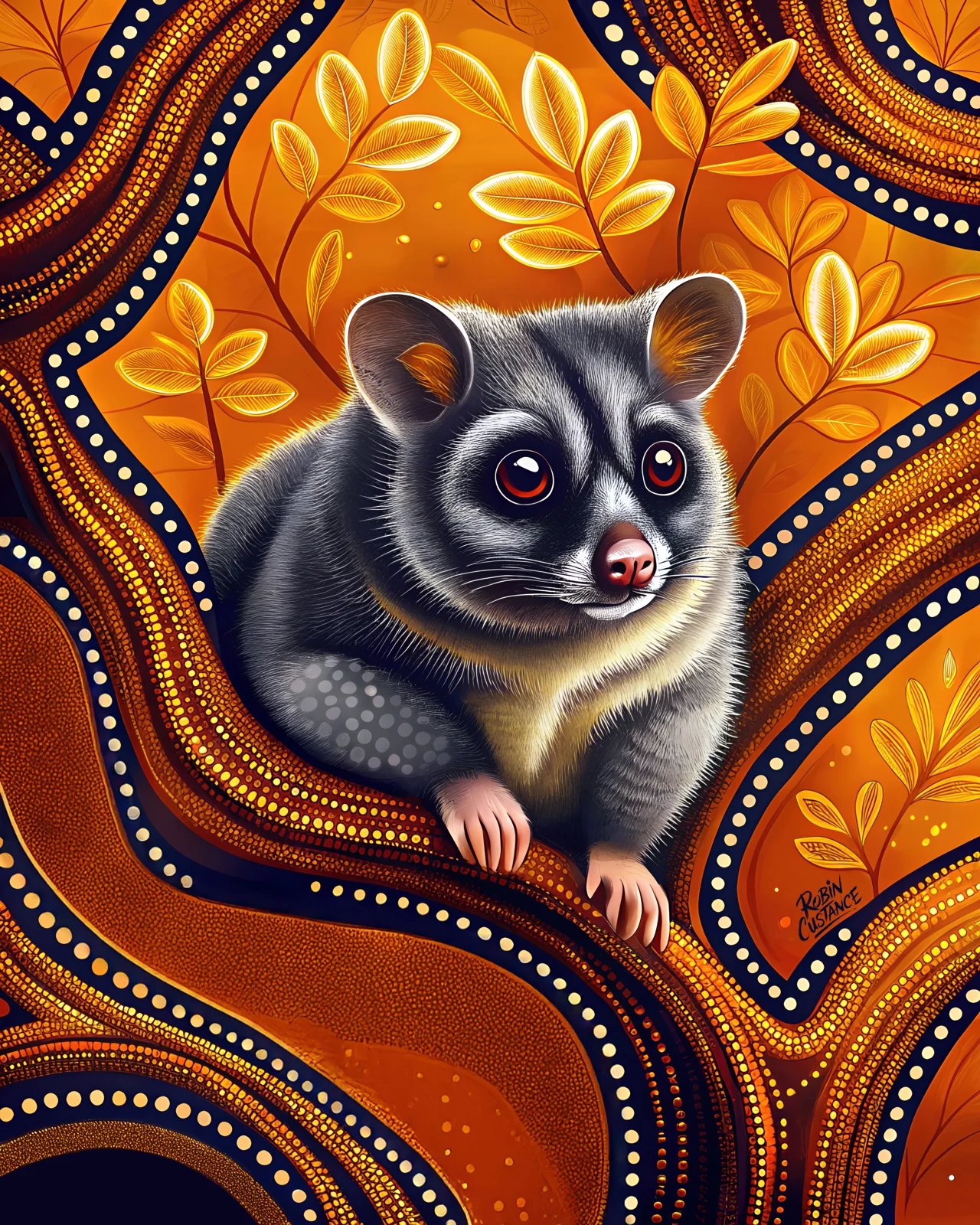
Possum in Golden Country
Explore artwork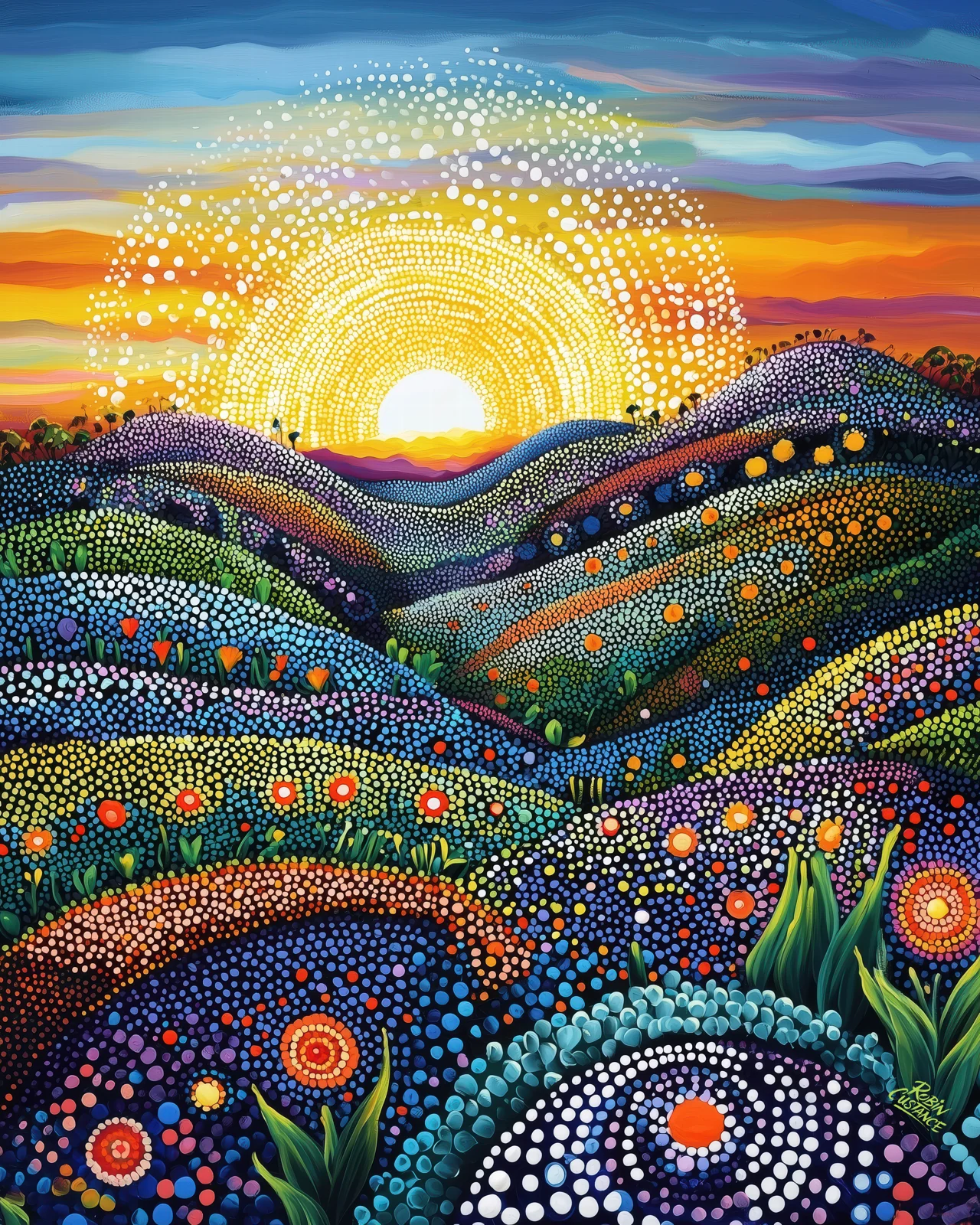
Sunrise Over Colourful Hills
Explore artwork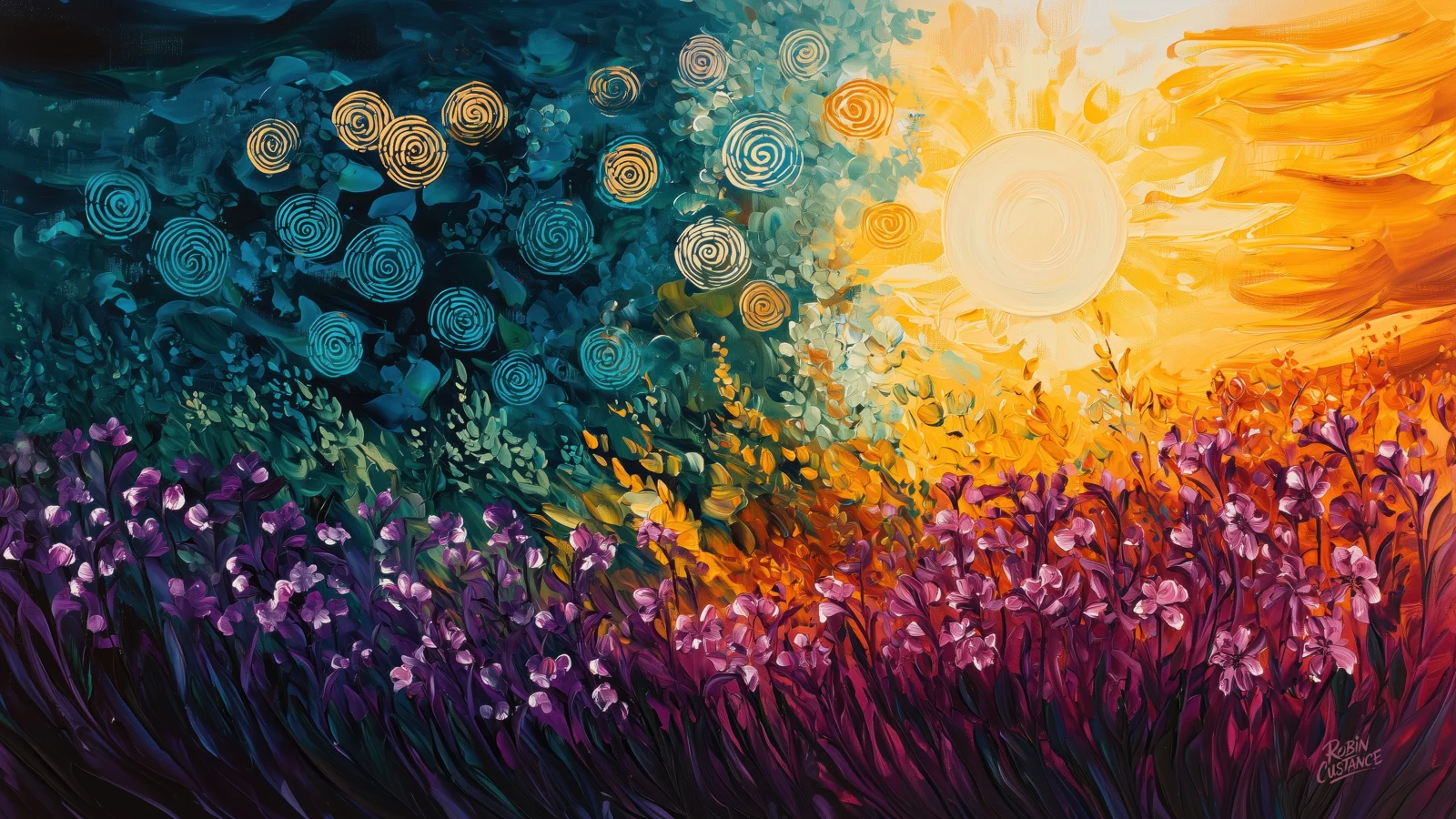
Colourful Sunrise — Dot-Style Landscape
Explore artwork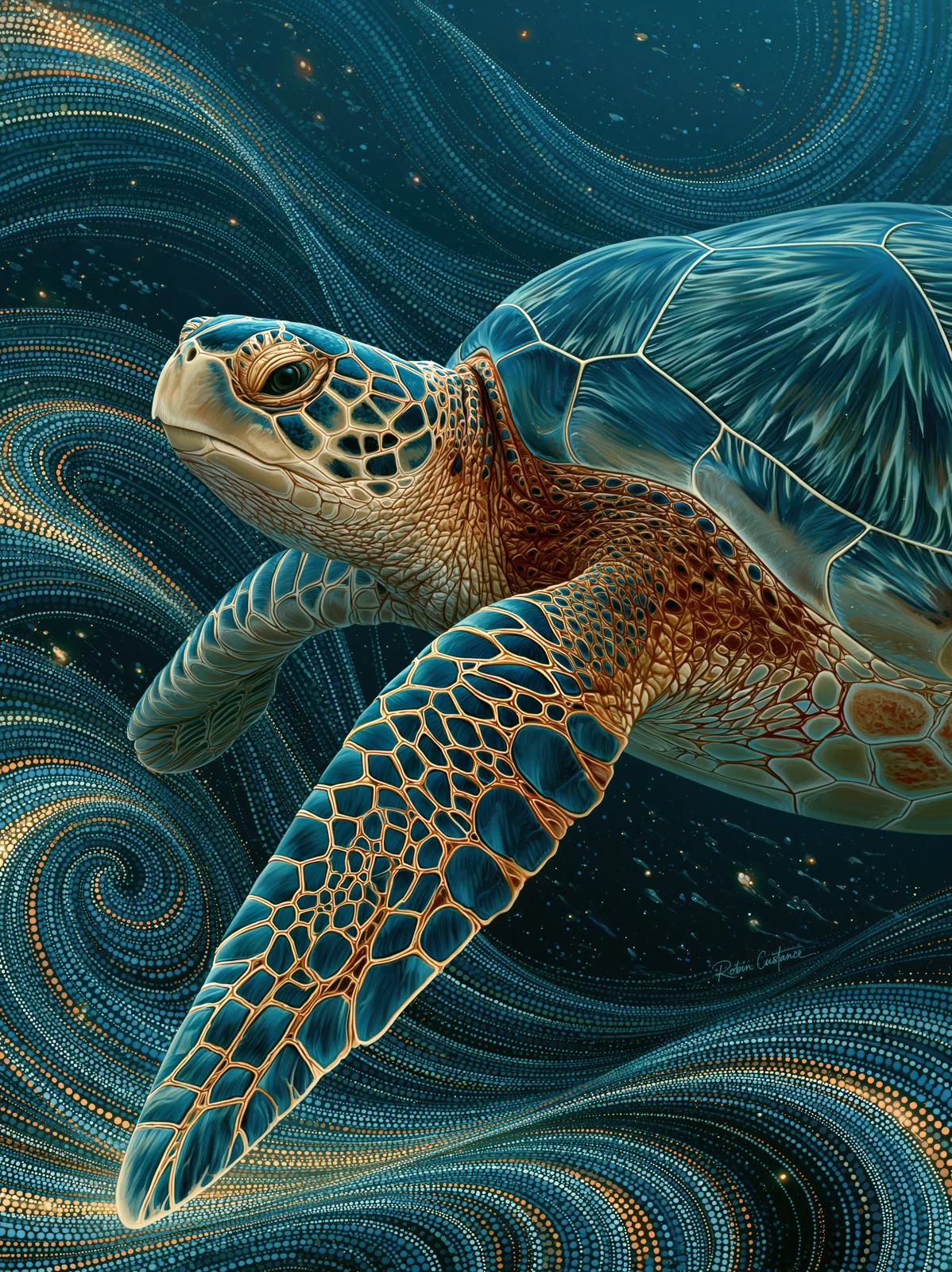
Teal and Gold Sea Turtle
Explore artwork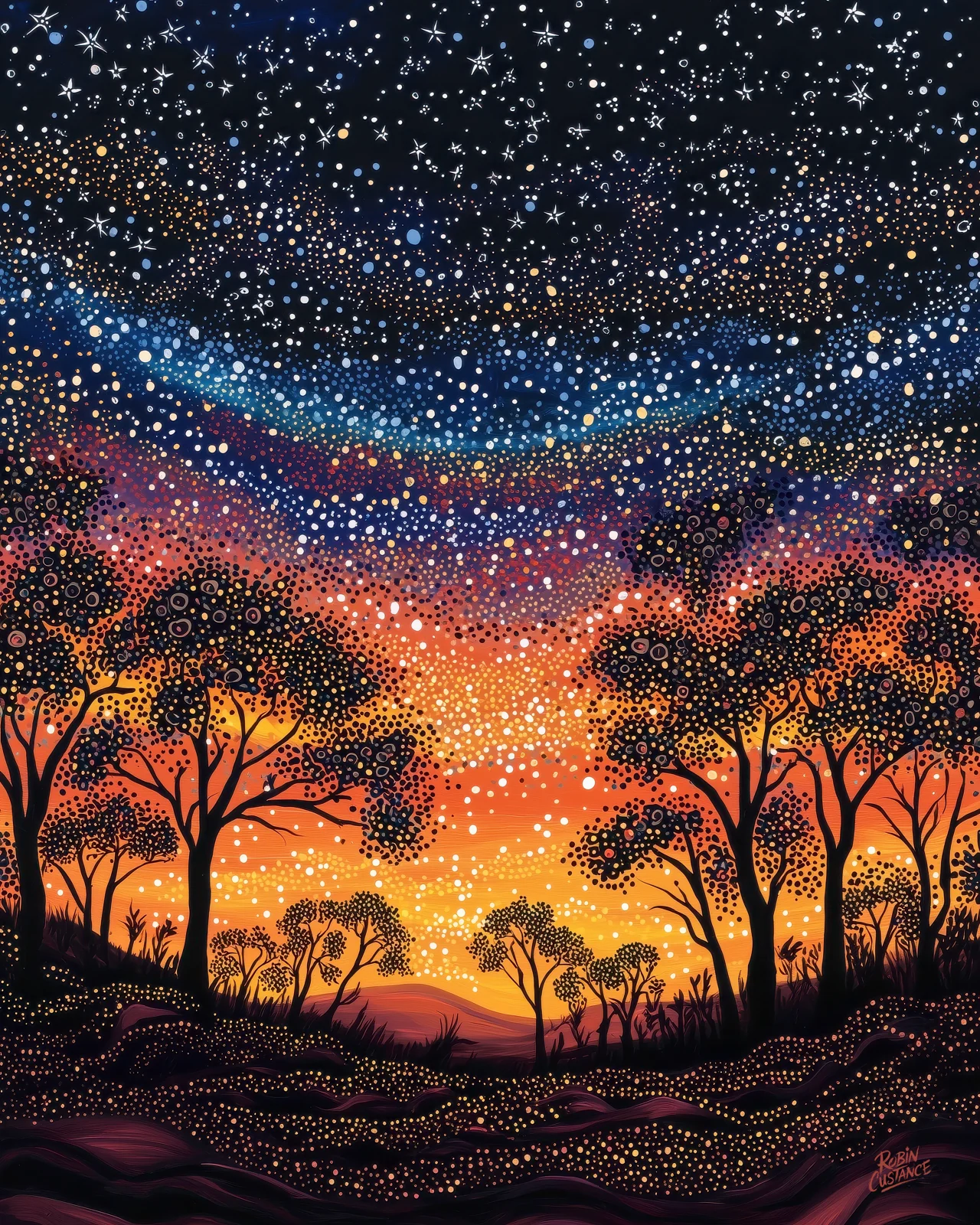
Starry Outback Trees
Explore artwork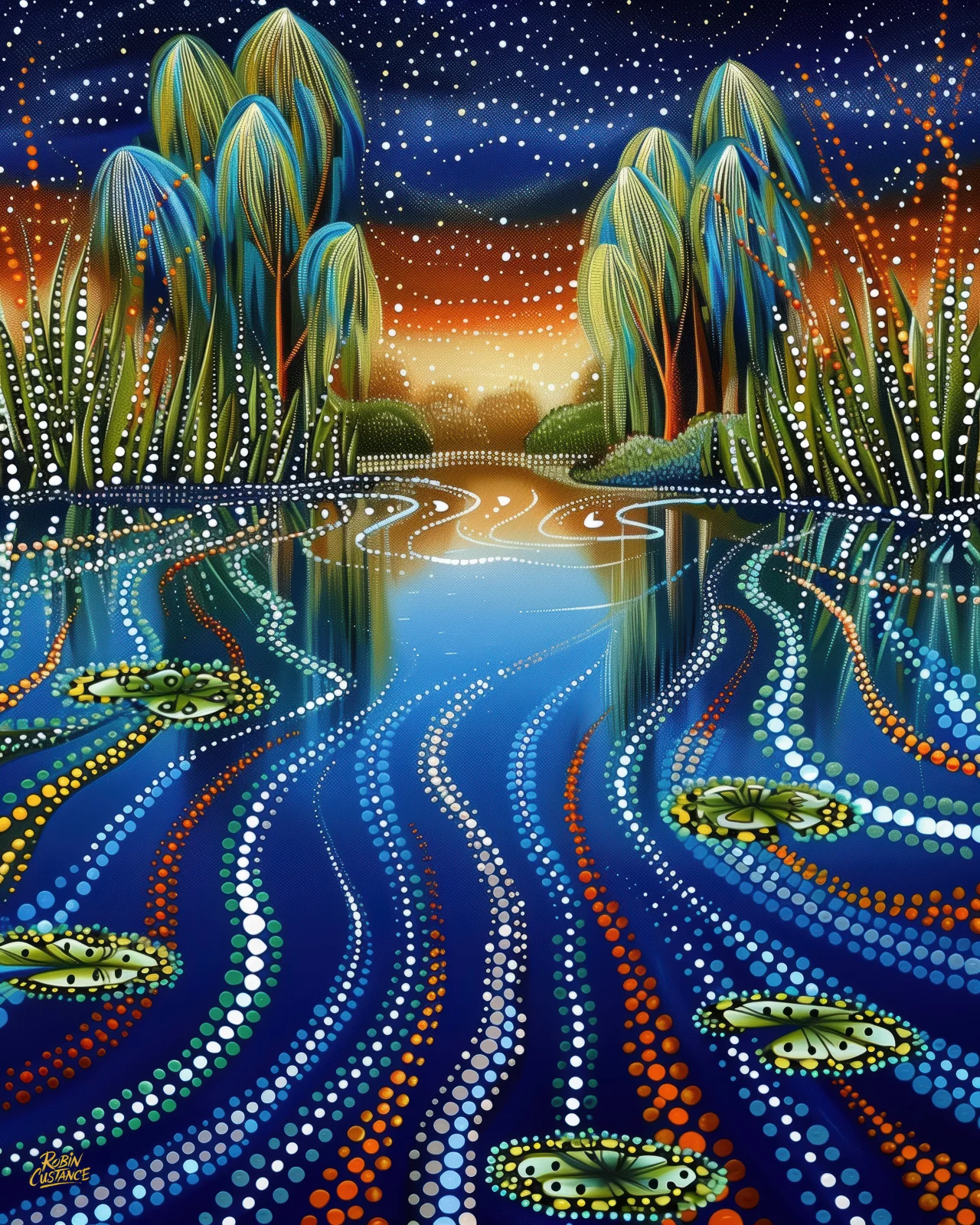
Outback Billabong
Explore artwork
Keep following the story.
The most valuable next step is to spend time with artists’ voices and the work itself. This introduction draws on the artist-owned company’s history, its partnership exhibition and museum research. It is an overview of public information, rather than a complete history of every Aboriginal art tradition.
Sources, artist biographies & further reading
- Papunya Tula Artists — the company’s own history (opens a new tab)
- National Museum of Australia — Papunya Tula (opens a new tab)
- NGV and Museum Victoria, with Papunya Tula Artists — Tjukurrtjanu (opens a new tab)
- National Museum — the Papunya collection (opens a new tab)
- National Gallery of Art — seven things to know (opens a new tab)
- NGV — Johnny Warangula, by former art adviser John Kean (opens a new tab)
- National Museum — a discussion of revealing and concealing knowledge (opens a new tab)
- Kluge-Ruhe with Papunya Tula Artists — women painters claim their place (opens a new tab)
- National Museum — Daisy Leura Nakamarra (opens a new tab)
- National Museum — Emily Kame Kngwarreye’s fields of dots (opens a new tab)
- National Museum — Kaapa Tjampitjinpa (opens a new tab)
- National Museum — Billy Stockman Tjapaltjarri (opens a new tab)
- National Museum — Long Jack Phillipus Tjakamarra (opens a new tab)
- National Museum — Tim Leura Tjapaltjarri (opens a new tab)
- National Museum — Clifford Possum Tjapaltjarri (opens a new tab)
- National Museum — Uta Uta Tjangala (opens a new tab)
- National Museum — Anatjari Tjakamarra (opens a new tab)
- Australian National University — authorised biographer Alec O’Halloran on Mick Namarari (opens a new tab)
- NGV — The Face of the Centre, 1971–1984 (opens a new tab)
- Japingka Gallery — Geoffrey Bardon’s early influence, David Wroth (2014) (opens a new tab)
Historical accounts sometimes differ over exact months, participant lists, spellings and dates. For example, museum accounts place the school mural at different points in 1971, so this page uses the year. Artists and community accounts remain central when records differ.
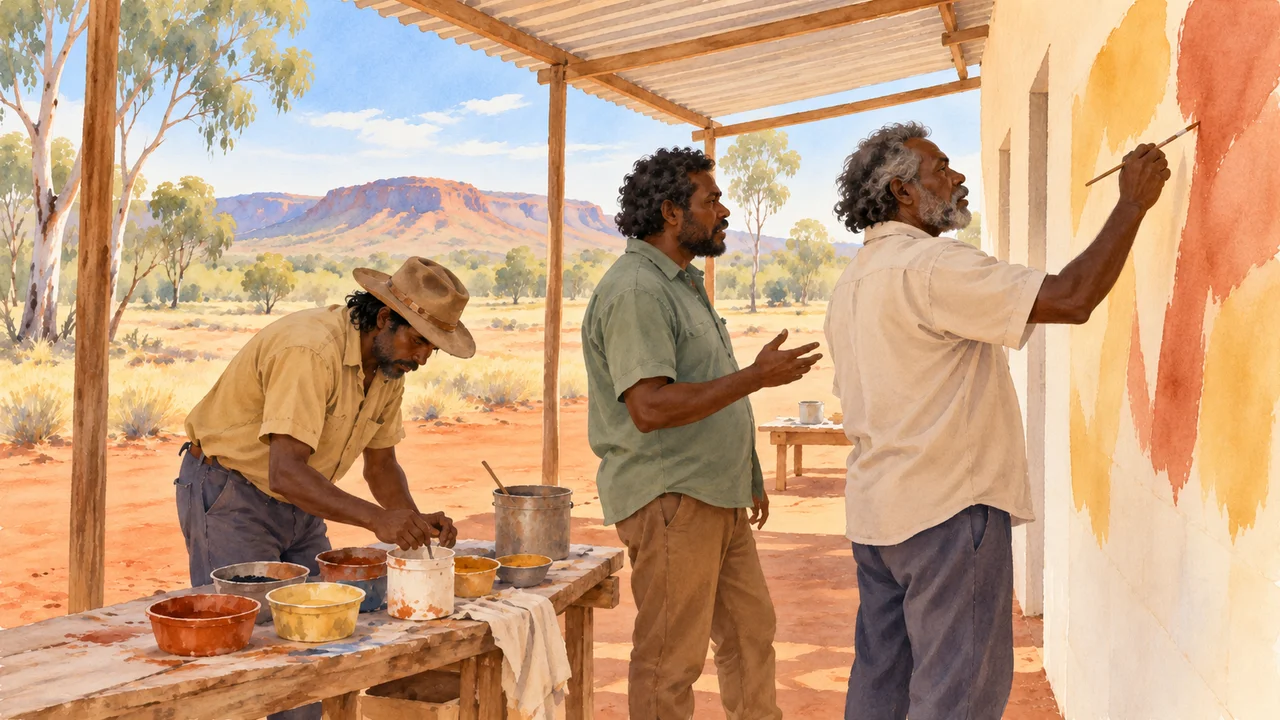
The watercolours are imaginative scene paintings, not archival photographs, named portraits or reproductions of the original mural or artists’ works. Prepared for Dream Art Gallery, October 2026.